

You come for the credits.
You stay for what they sit inside.
You start to greet the lady at the warung by name. You learn that the afternoon rain is punctuation, not an interruption. You work out which of your neighbours has a ceremony this week, because the street tells you long before anyone says so.
None of this is on a timetable. It is what happens in the hours around your classes, and by month three it has quietly rearranged what you think a good day looks like.
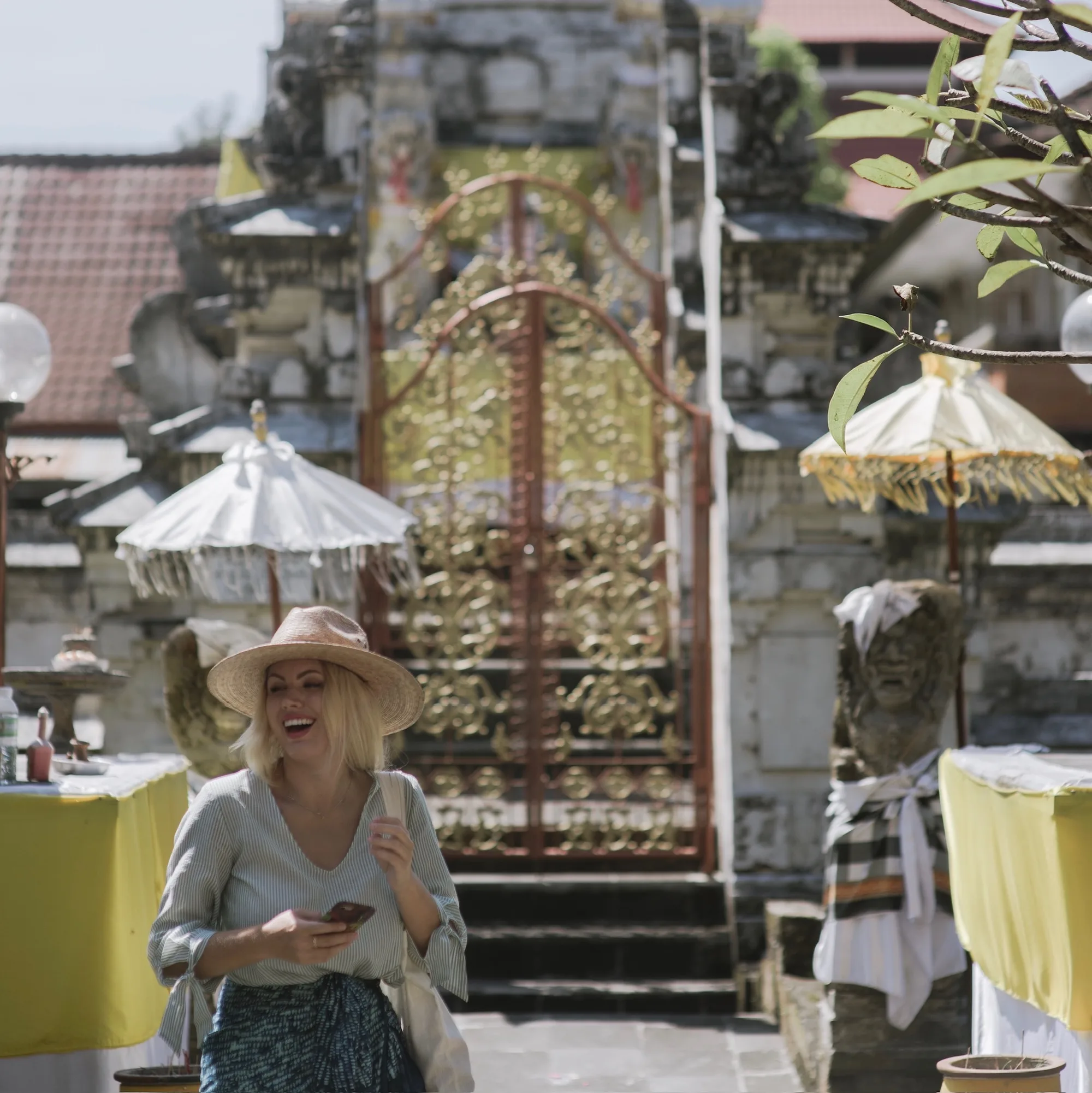
Why students
actually come.
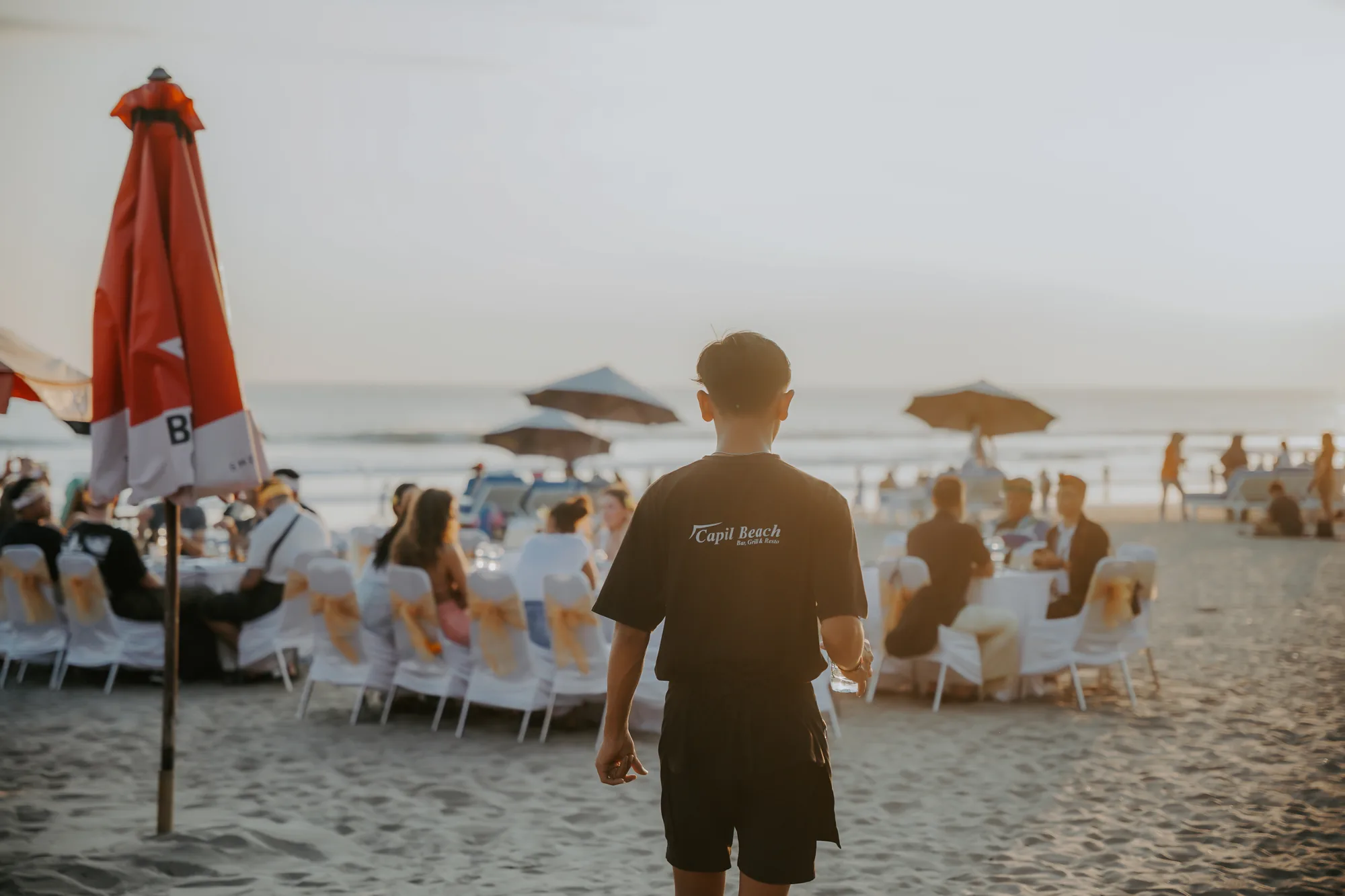 Welcoming dinner · week one
You never leave that way.
Small international cohorts, a shared villa, the morning surf, the warung dinner. Most students come solo. By week two it stops feeling like a class, and most leave with people they still travel to see years later.
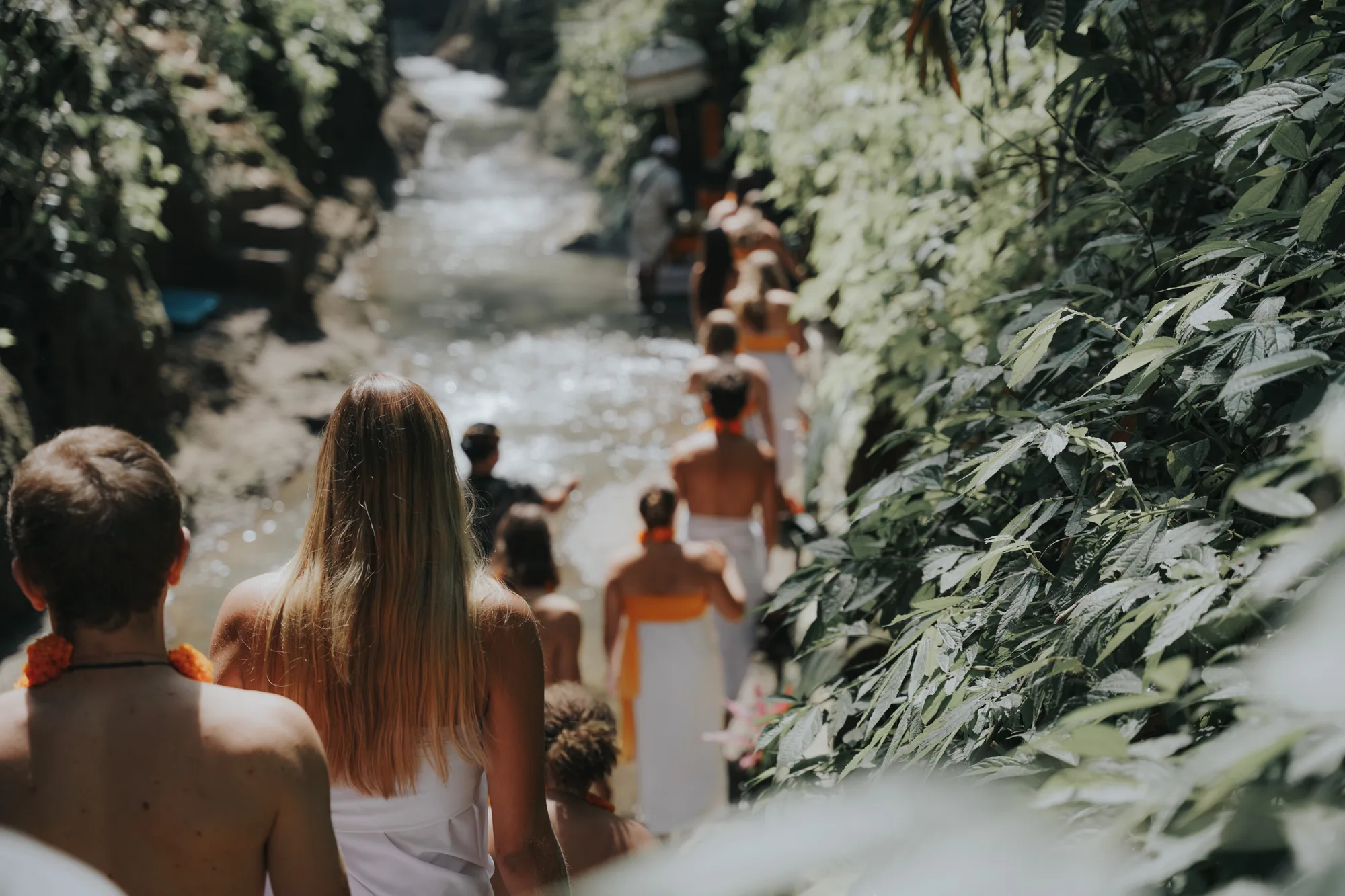 Weekend · jungle waterfall
leaving the building.
Surf before breakfast, a village that has looked the same for six hundred years, a temple ceremony after dark. All of it sits within a day's ride of where you live, and a lot of it counts as coursework.
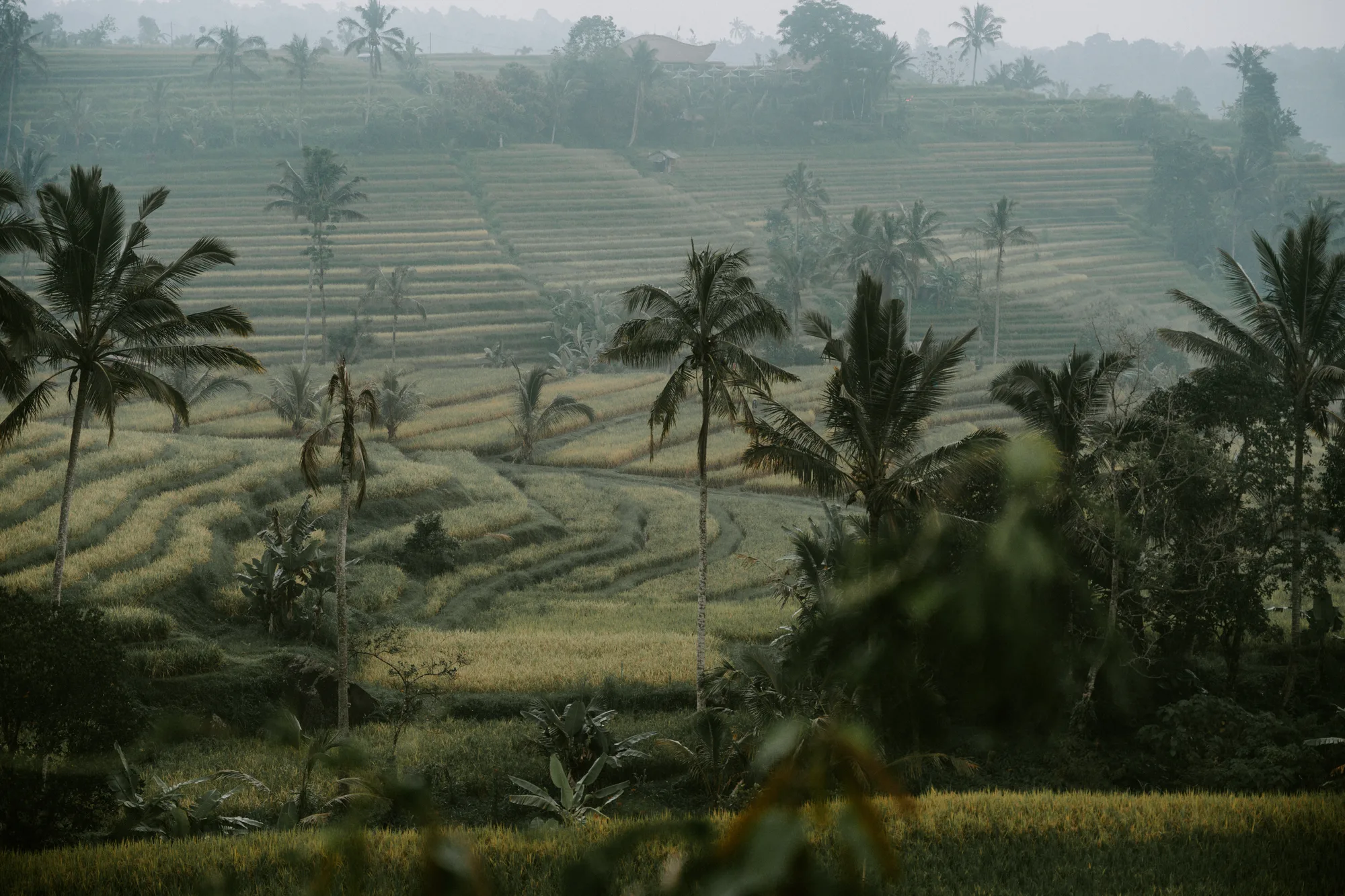
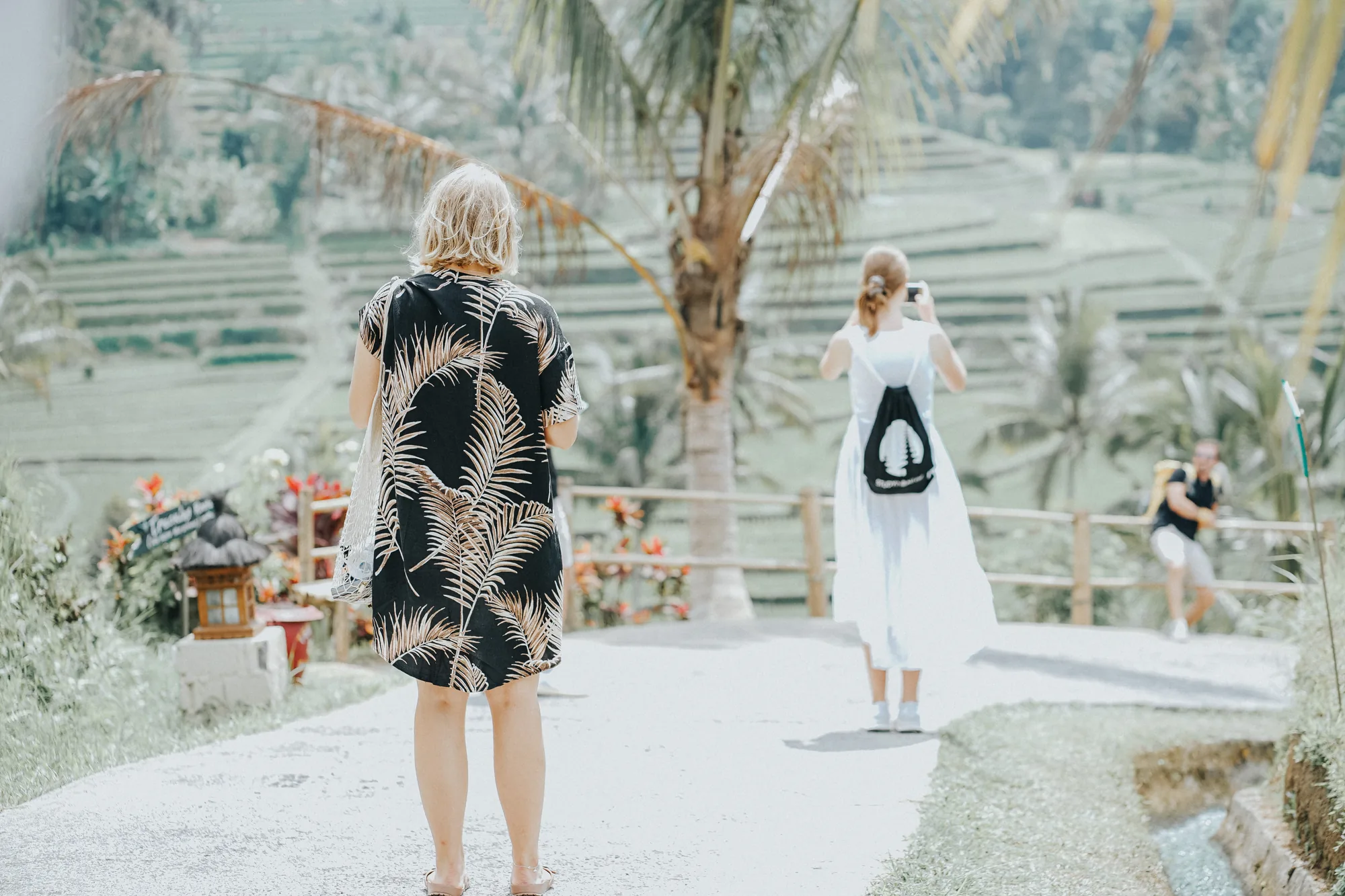 Jatiluwih · the long look
seeing differently.
Three months of slower mornings and longer afternoons, and your sense of a productive day rearranges itself. Students who come for the credits stay for the rhythm, and most fly back at least once after they leave.
Scroll through
a day on the island.
Class is the fixed point. This is the shape of the hours around it, from the first light to the last jump in the pool. The line fills as you scroll.
From the outside it will look like the best months of your life. The credits are real all the same.
an ordinary class day · excursion days live on each program page
Excursion day sits outside the normal rhythm · the whole course travels together to a village that has looked the same for six hundred years, a palace courtyard, a bamboo workshop · Penglipuran, Ubud, Green Village, Jatiluwih, Tenganan, depending on your program.
The place decides the subject.
Three academic partners
carry the credits.
Every module is taught, examined and credited by an accredited Indonesian academic partner. Your academic documents come from the institution that teaches you. Your home institution makes the final recognition decision; we provide the paperwork it needs.
Bali's largest public university, on the Sudirman Campus in Denpasar. Teaches Sports & Physiotherapy, Southeast Asian Engineering and Architecture, and sponsors your student visa.
Institut Desain & Bisnis Bali, in Denpasar. Home of the Tropical Architecture, Interior & Green Design semester and the summer school.
Politeknik Internasional Bali, in Tabanan. Hosts tourism, digital business and the culinary, photography and sports short courses.
…and more. New campus partners join as new programs do.
One island,
your radius.
Campus in Denpasar or Tabanan, villa in Canggu or Umalas, surf at Kuta, excursions north and east into Ubud, Penglipuran, Jatiluwih and Tenganan. Bali is about 145 kilometres wide, so everything on this map is a day trip at most. The daily ride is the one to know: most students live around Canggu and reckon on forty minutes to the Denpasar campuses, traffic included, and they choose it anyway.
There is no reliable public transport, so everyone rides. Within a month you will know the shortcut to campus, which warung is worth the detour, and how the light changes at six. What it costs and what licence you need lives on Life in Bali.
· · · · · · · · · ·
A week here does not fold into a schedule. Class is real, and so is everything around it. These are the moments you end up texting home, more or less as they land.
moments from real weeks, stitched together
And then there's
the Bali magic.
Ask anyone who has spent a semester here and they will mention it, usually with a pause, because it is hard to explain. Days feel longer. Strangers become housemates, and housemates become the people you fly across the world to see again. The island keeps its own ceremonies running around you, and somewhere in the first month you stop watching them like a visitor.
The Balinese have a name for the balance behind it: Tri Hita Karana, harmony with people, with nature, with the divine. You will not find any of this on a timetable. It happens to almost everyone who comes anyway.

You leave with
more than a transcript.
Three things come back with you, and only one of them is on paper.
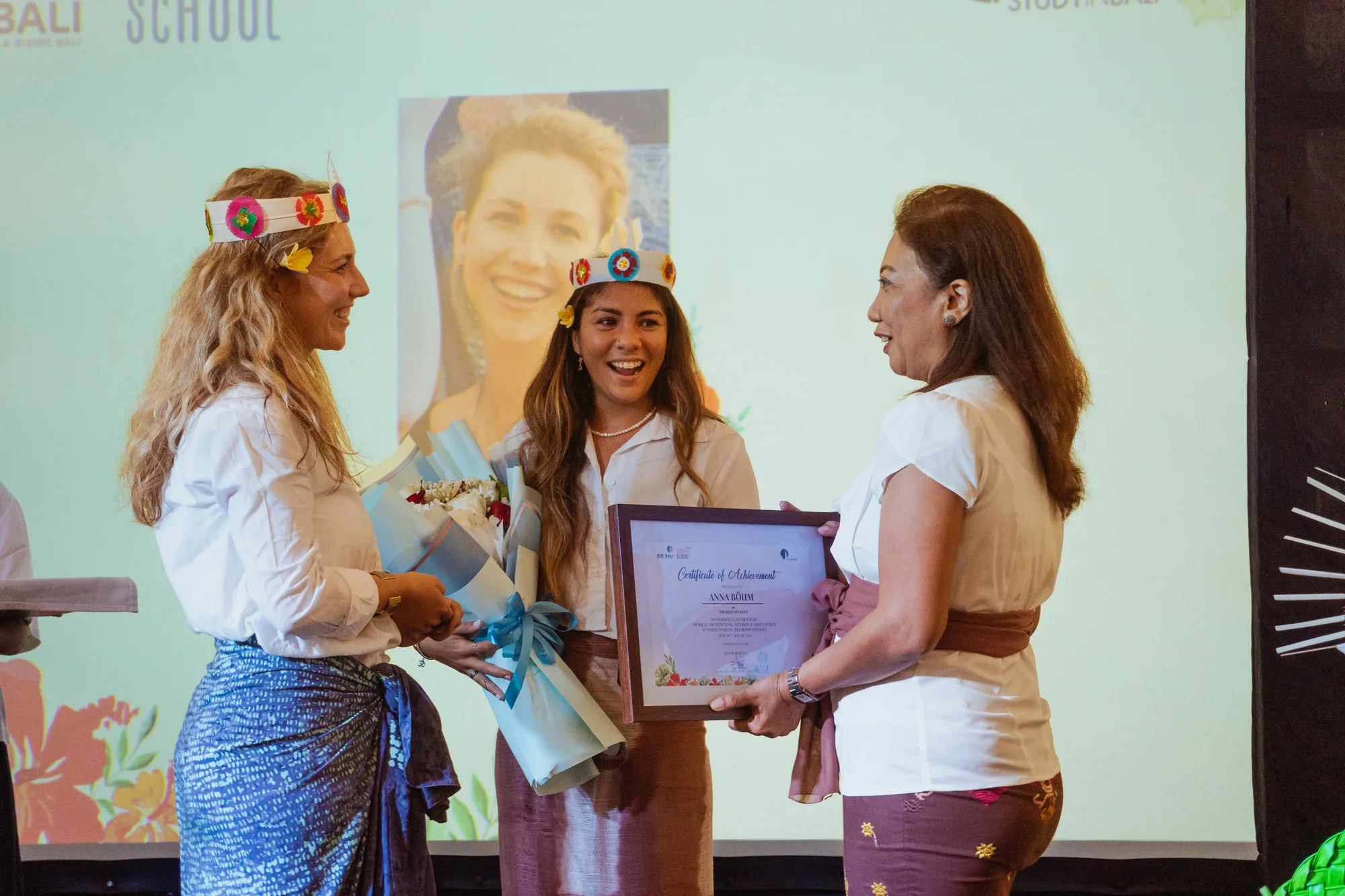
An academic transcript and letter of completion from the teaching partner, stated in ECTS. Workload comparisons can support an assessment in other credit systems, but recognition is your home institution's call. Confirm it before you apply; we provide the paperwork it requests.
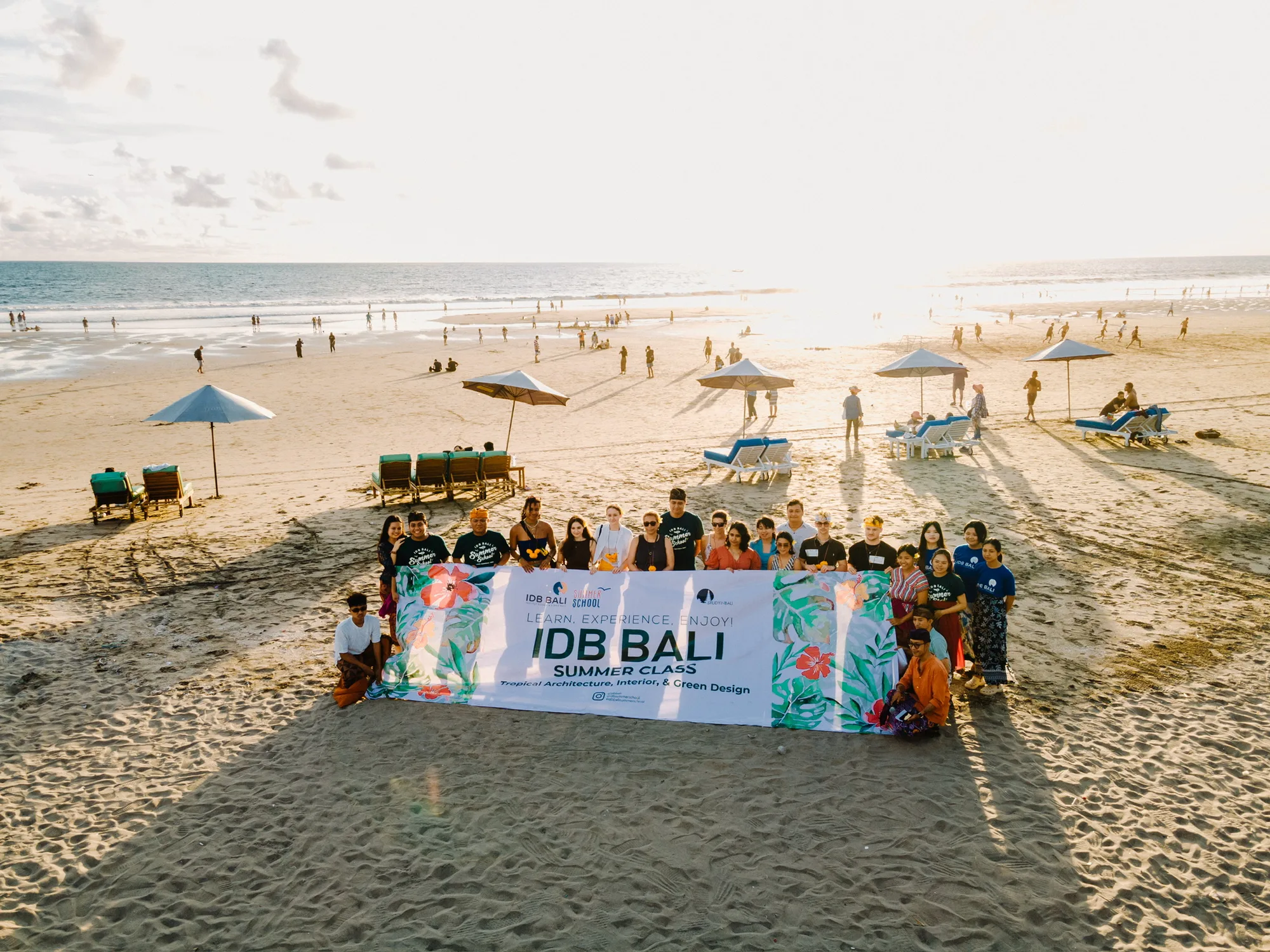
You arrive solo and leave with a cohort you still travel to see. Small groups are the whole point, not a side effect.
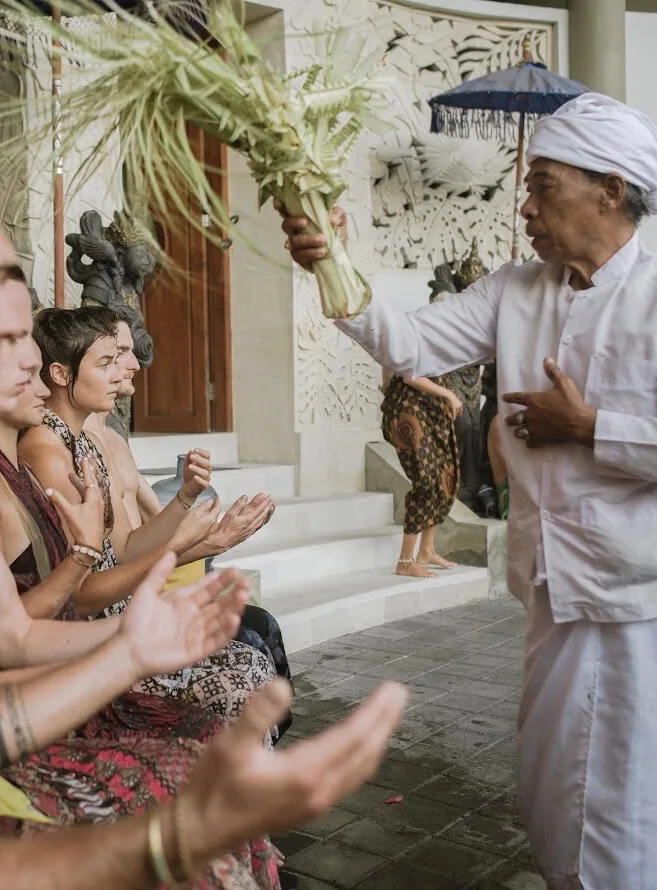
Tri Hita Karana, the balance between people, nature and the divine, stops being a slide and becomes the street you live on. It changes how you work long after you fly home.
See it
for yourself.
The whole catalogue lives on this island. Start with the finder or go straight to it.
Not sure which one? Take the 60-second finder · Book a 1:1 call · WhatsApp us