

Exotic Culinary
Arts
Five modules, thirty-plus dishes, and a wall of Indonesian herbs and spices you learn to read by smell.
Apply now →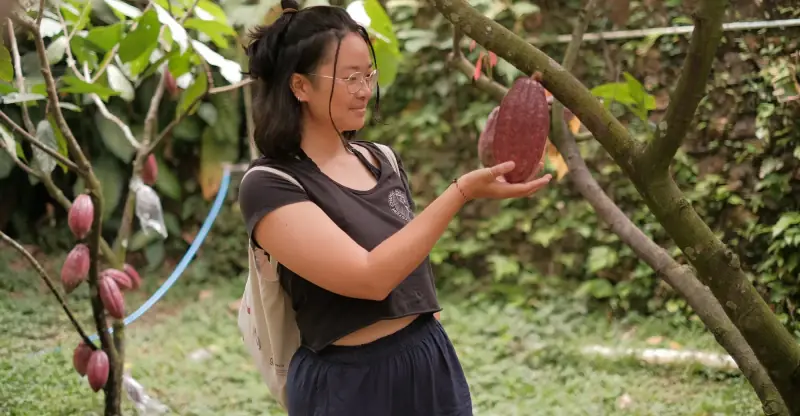
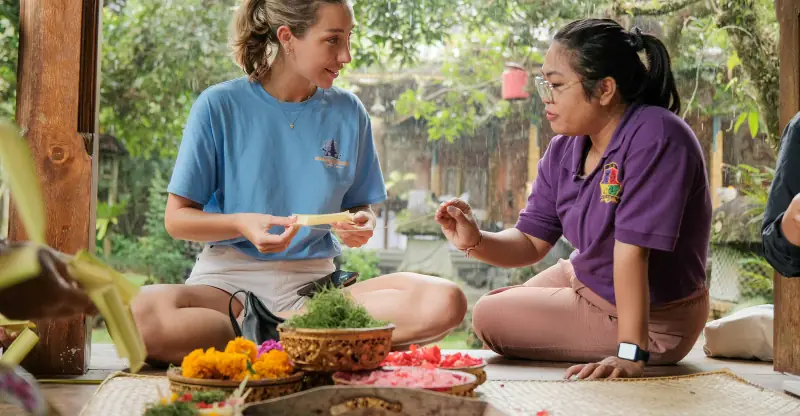
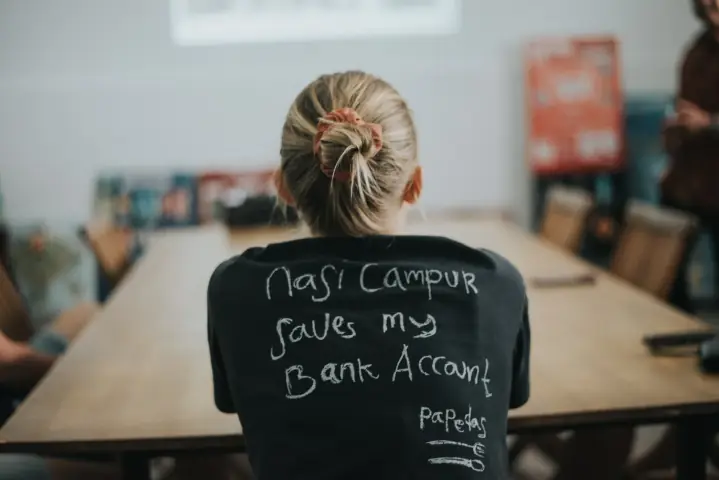
The Mid Year cohort has graduated. The next intake is the Late Year Session, 2 to 27 November, and registration is open now in the Regular phase.
No lecture hall.
a kitchen.
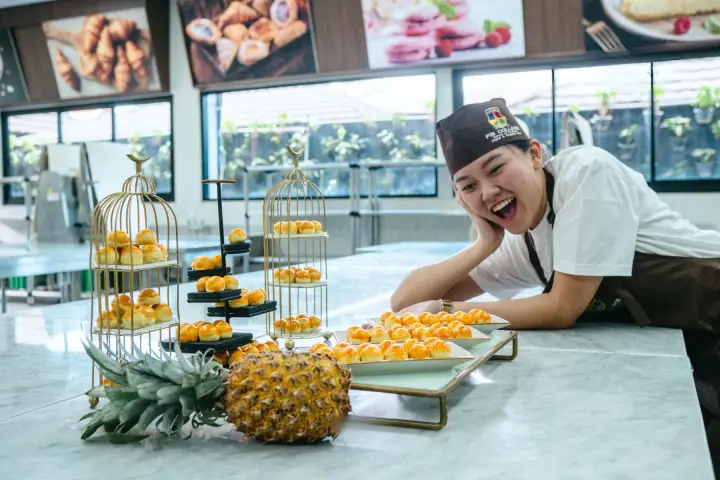
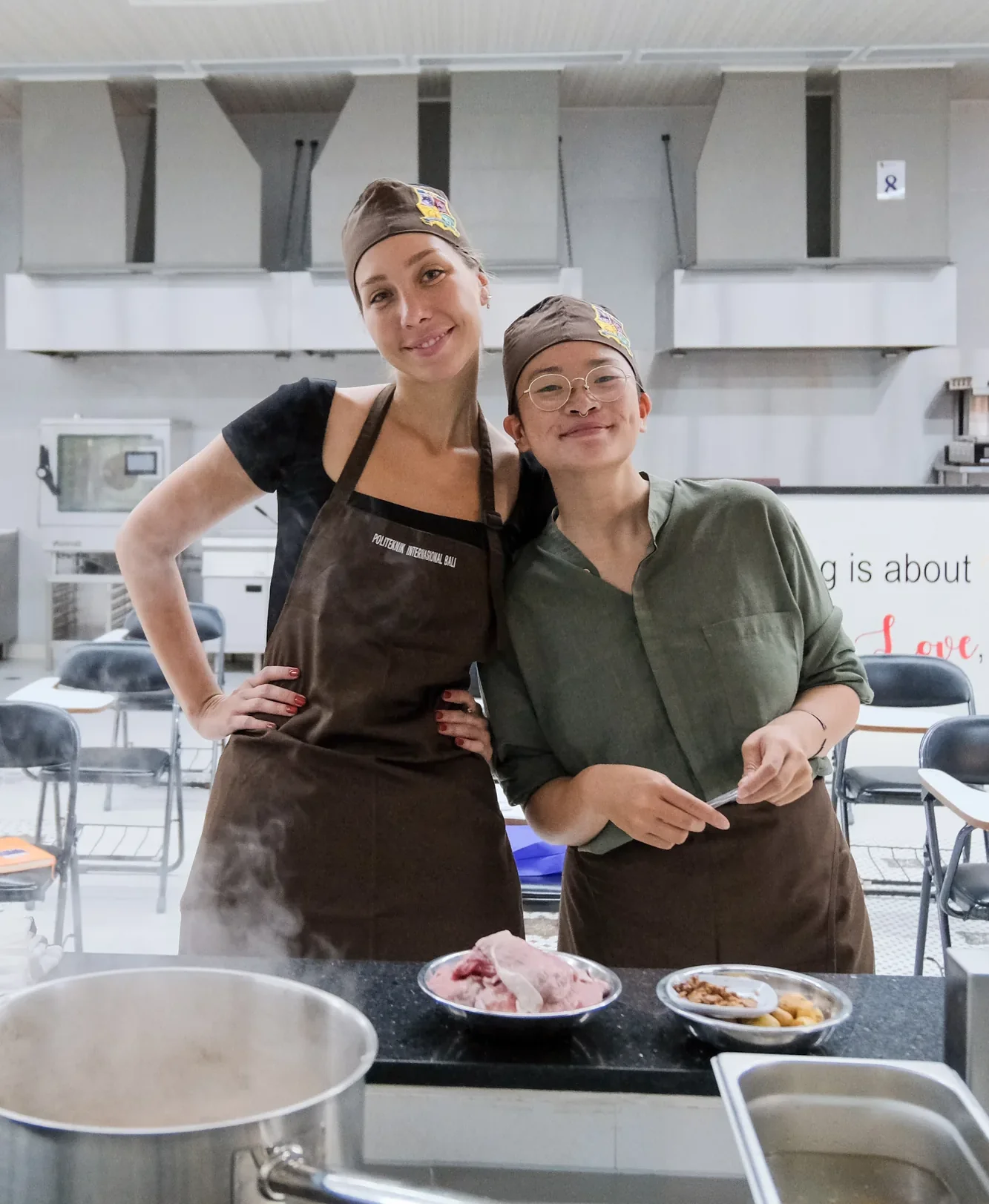
The week runs on the PIB timetable: internationally trained chefs, a professional kitchen and pastry lab, and thirty-plus dishes cooked with your own hands across four weeks in Bali.
Five modules,
from Indonesian spices to the business of the kitchen.
Taught, examined and credited by PIB College. Up to 10 ECTS, two per module. Each module carries its own assessment. The academic documents come from PIB College; we help you provide them to your home registrar.
Indonesia's herbs, spices, curry bases, sauces and fermented ingredients, with a focus on the nutritional side of Southeast Asian cooking against heavier Western kitchens.
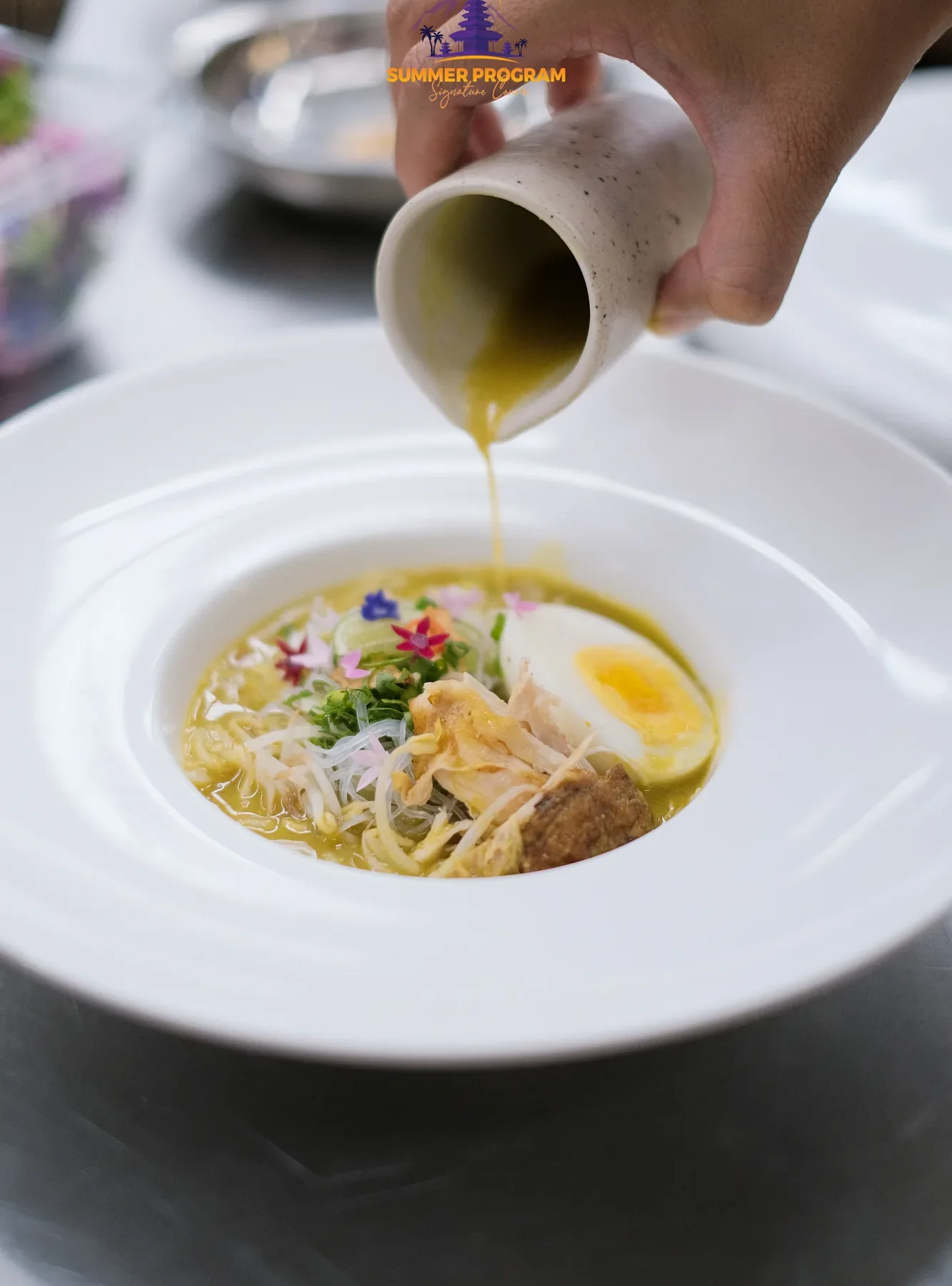
Hands-on work through the icons, from Nasi Goreng and Sate Ayam to Rendang and Ayam Betutu, plus the recipes, presentation and the place of rice and coffee in Indonesian food.
A journey through Korean, Japanese, Vietnamese, Singaporean, Chinese, Thai and Indian kitchens: Kimchi, sushi, Pho, Tom Yum and Hainan chicken rice, cooked and plated.
Traditional Indonesian pastry, desserts and sweets, from Klepon to Bika Ambon, alongside visual decoration: fruit carving, ice carving and traditional plating.
Runs across all four weeks: kitchen safety, food-cost calculation, storage and menu engineering, plus a culinary business plan and the basics of hiring and training a kitchen team.
ECTS, a credited short course. Certificate and academic transcript from PIB College travel home with you.
Students on a bachelor, master or diploma track, who take the credits home. Chefs and people already working in kitchens, hotels or F&B, who want the Southeast Asian side of the craft. And anyone who simply cooks, with no formal background at all. The course program is built to be joined from scratch.
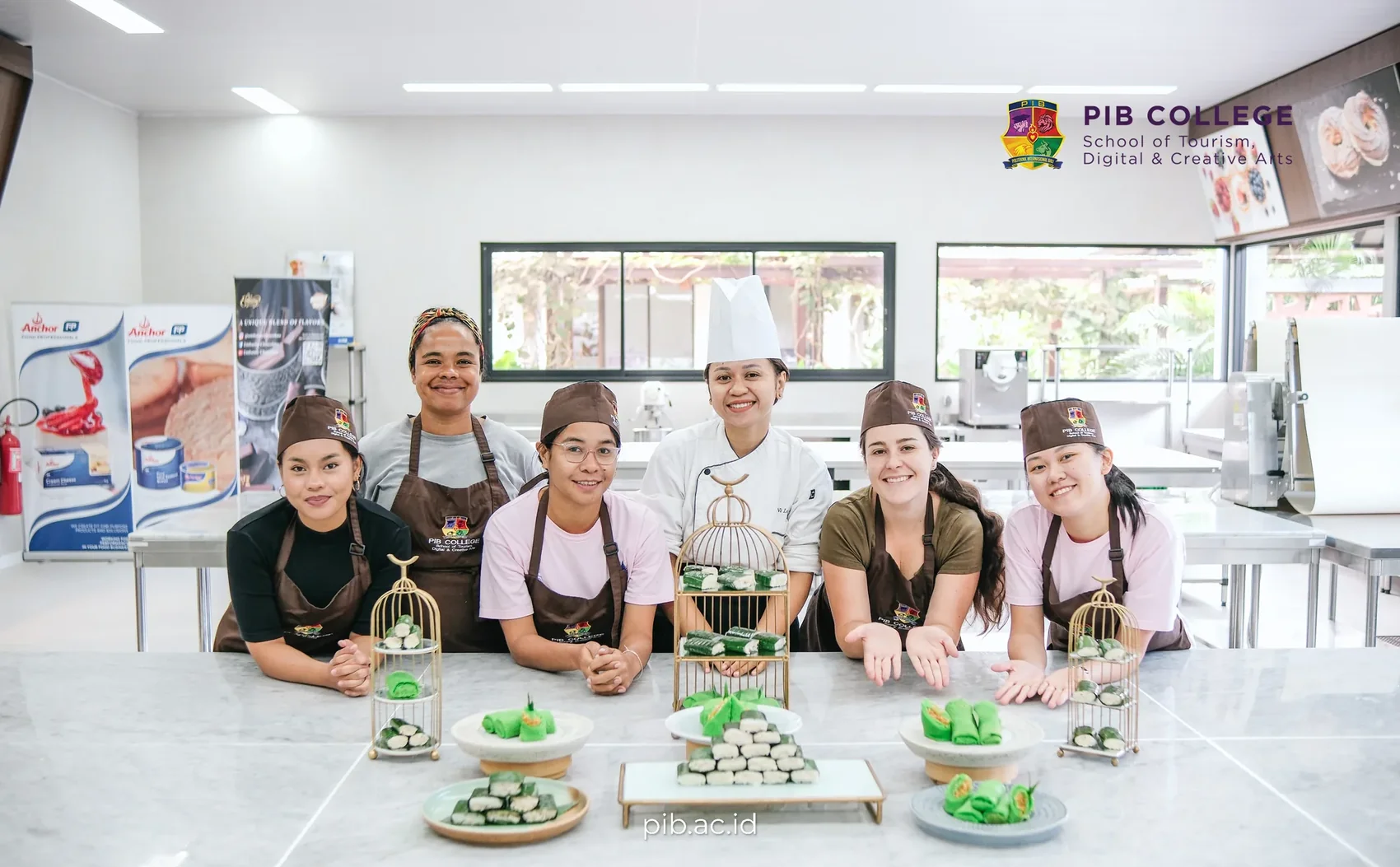
Excursions are marked tentative in the course program and vary by session and weather. Optional weekend add-ons in past sessions have included rafting on the Ayung, glamping at Kintamani and a sunrise hike up Mount Batur.
Kitchen, service
and excursions.
move through a week in the kitchen ↓
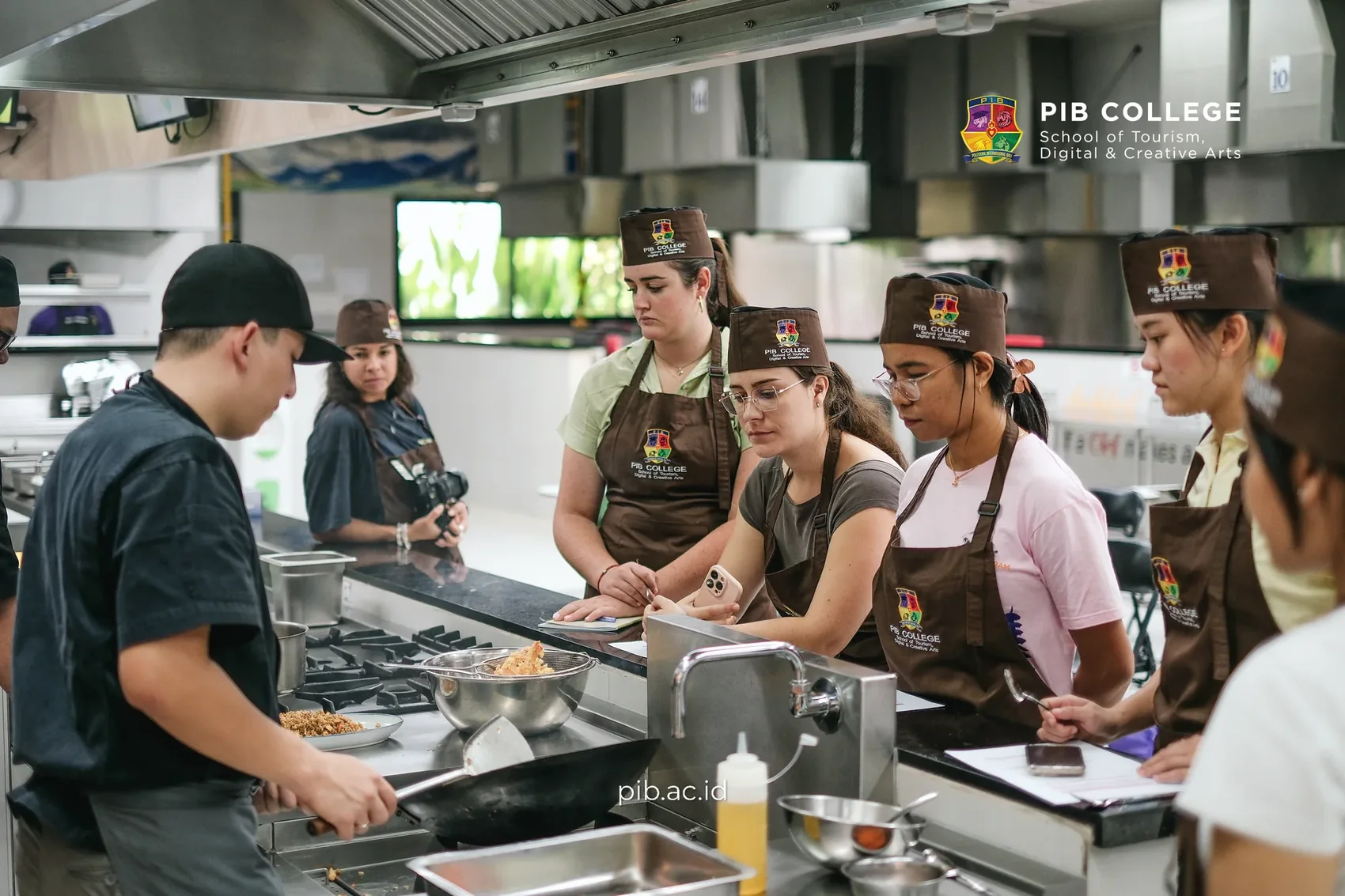 MondayInto the lab
The week's module opens with theory in the morning and the first hands-on session after lunch. Ingredients, technique, and why a dish is built the way it is.
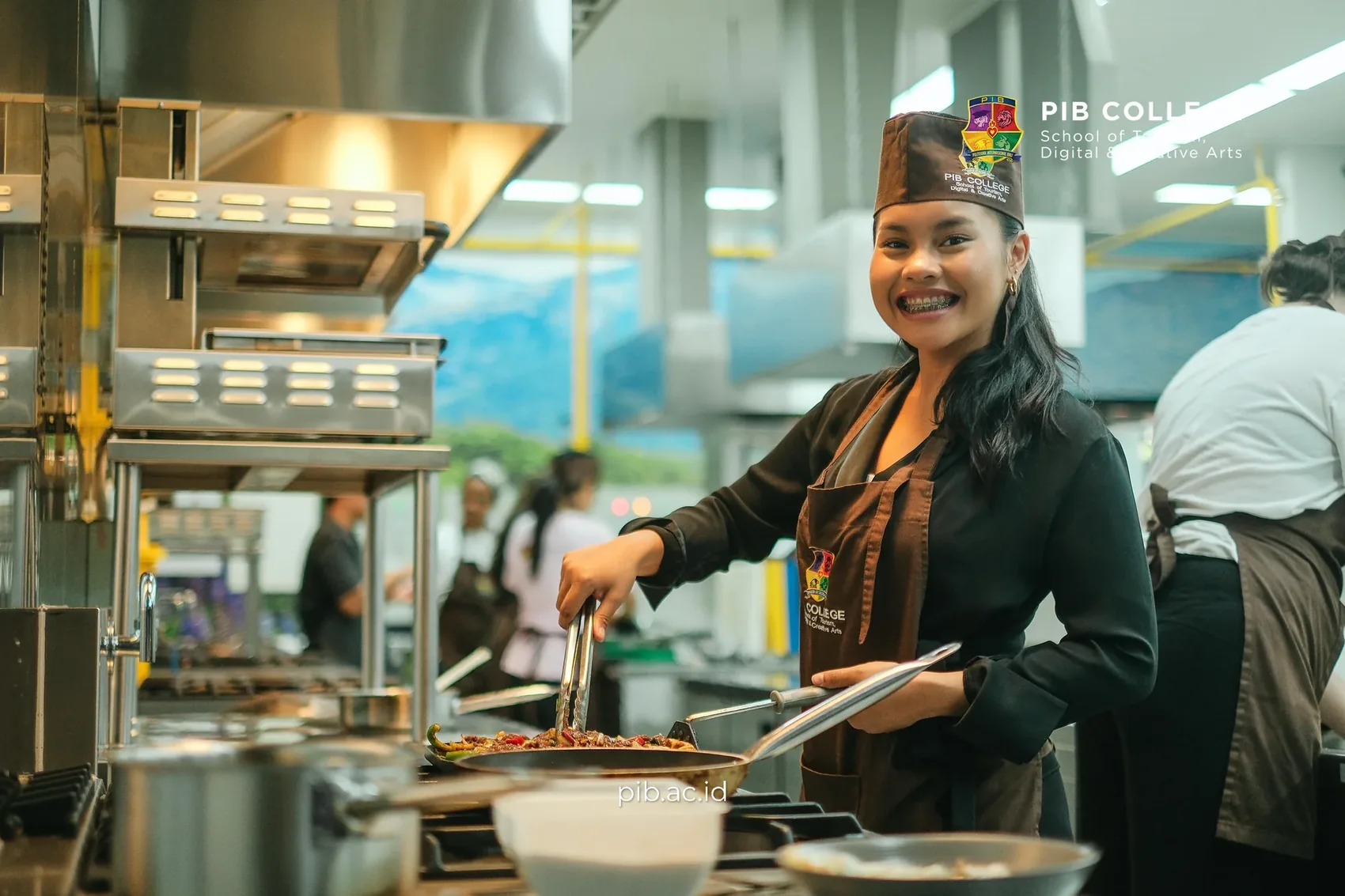 TuesdayCook and plate
A full day in the kitchen lab, two sessions with a break between them. You cook the dishes on the week's list and they get tasted and assessed.
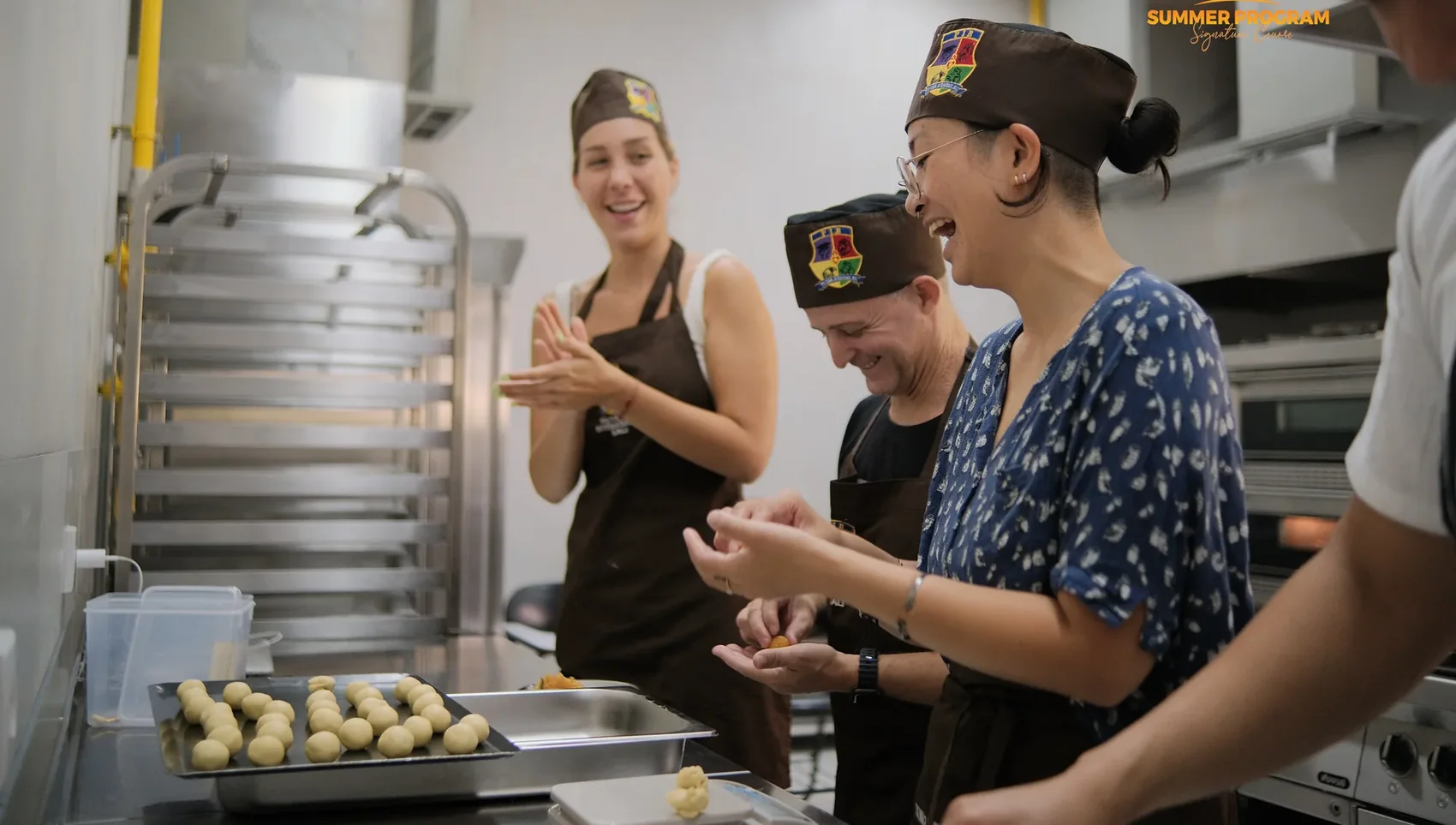 WednesdayPastry and service
The labs rotate: pastry, the MICE kitchen, the training café. Kitchen management runs quietly through all of it, week after week.
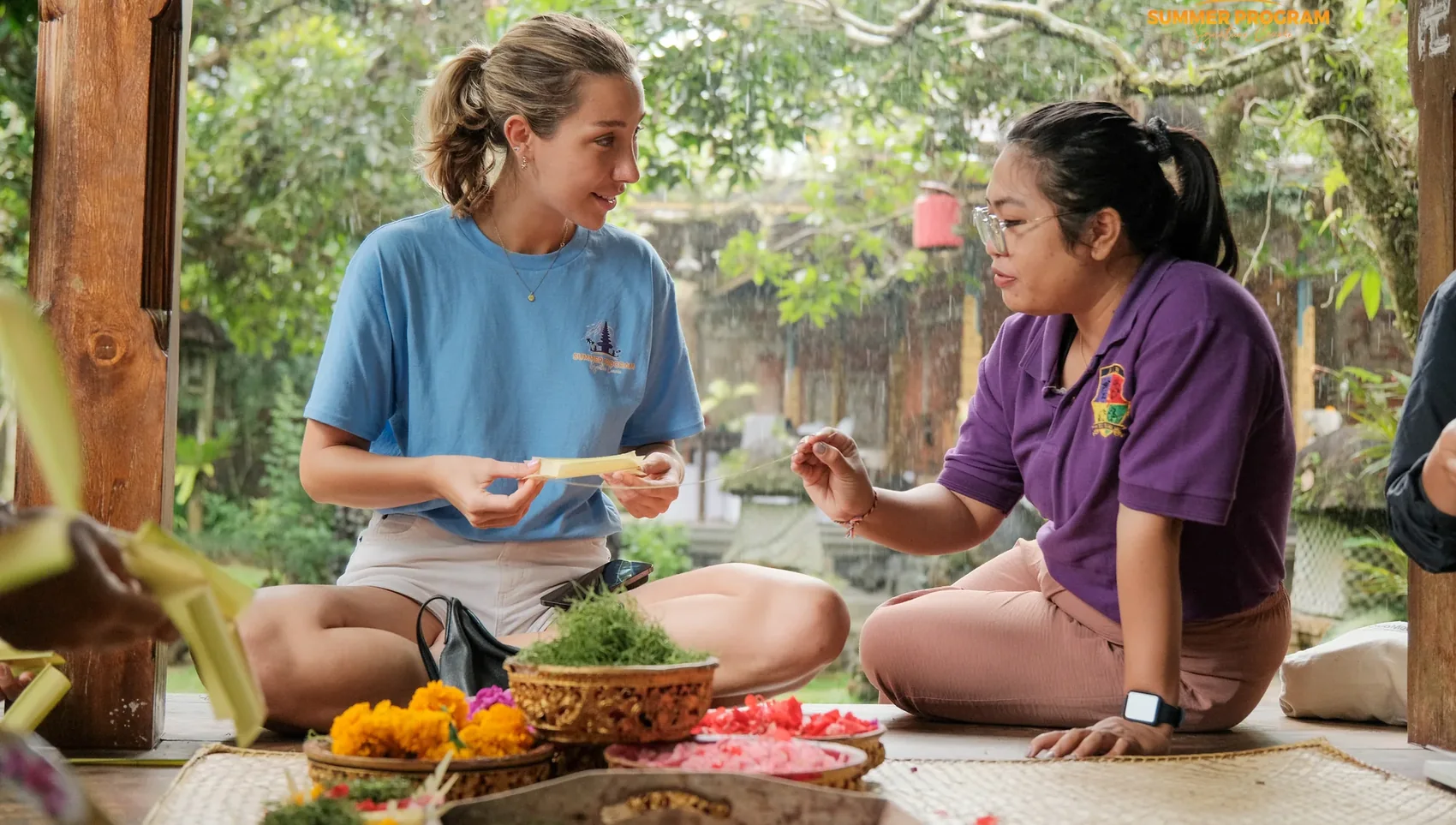 ThursdayExcursion day
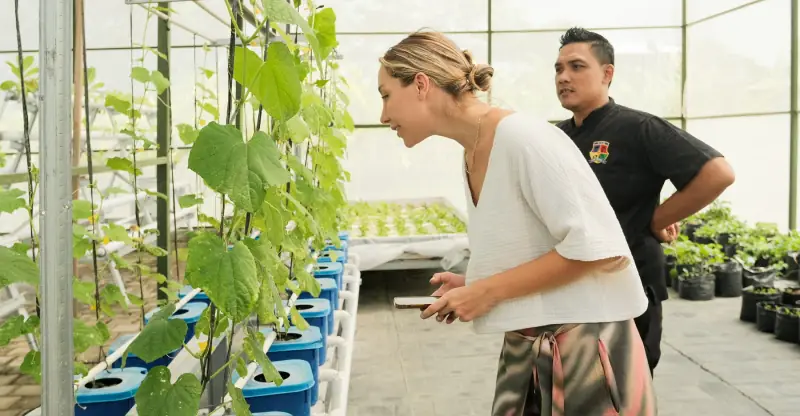
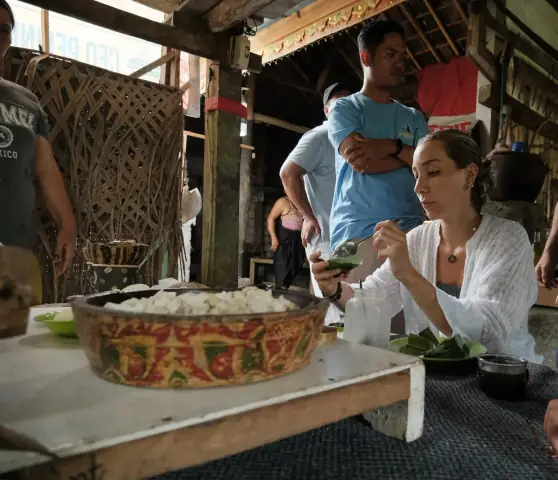
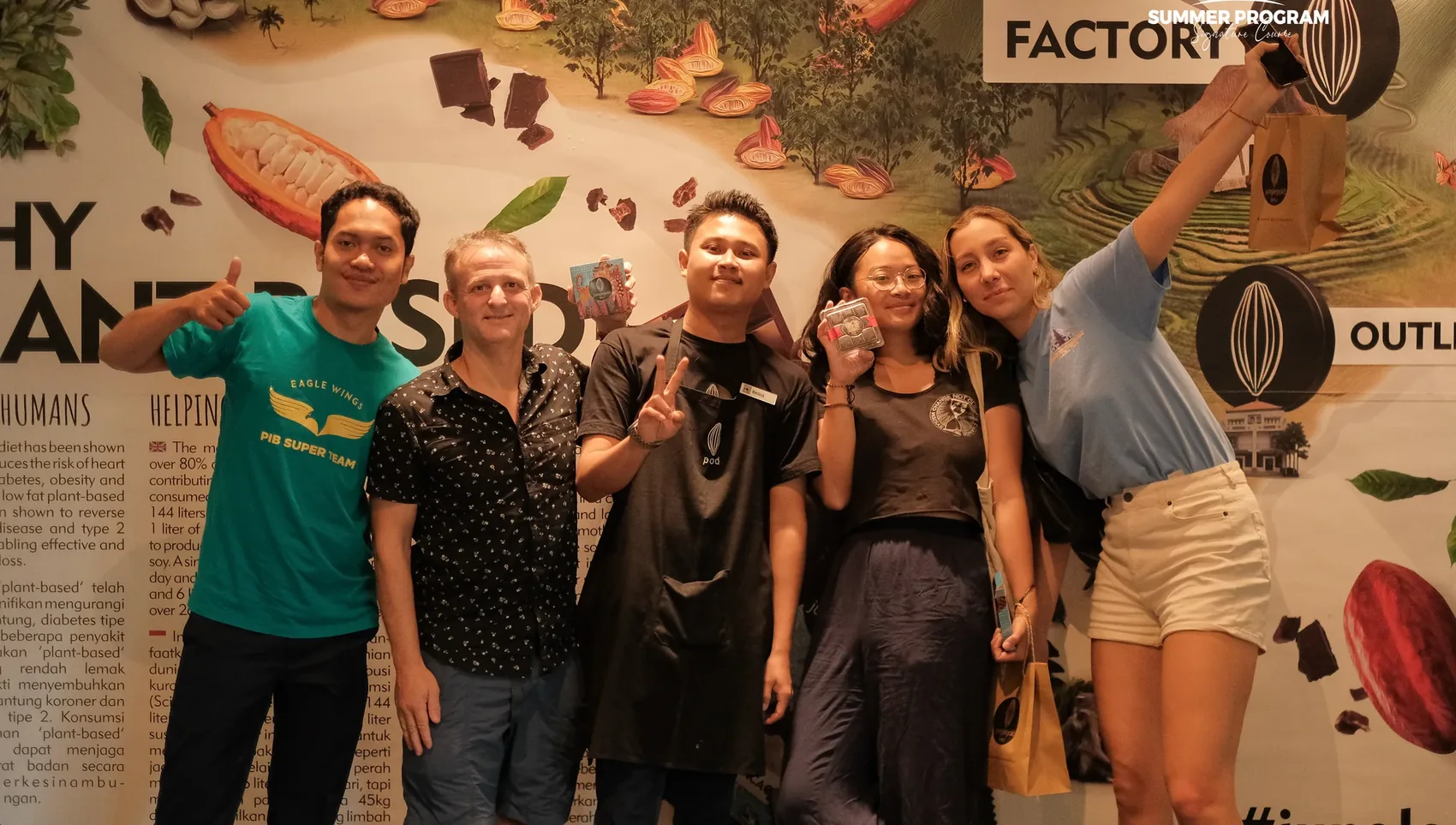
Out early, back mid-afternoon, transport provided. A market before sunrise, a cacao farm, a rice terrace, a village kitchen, matched to what you cooked that week.
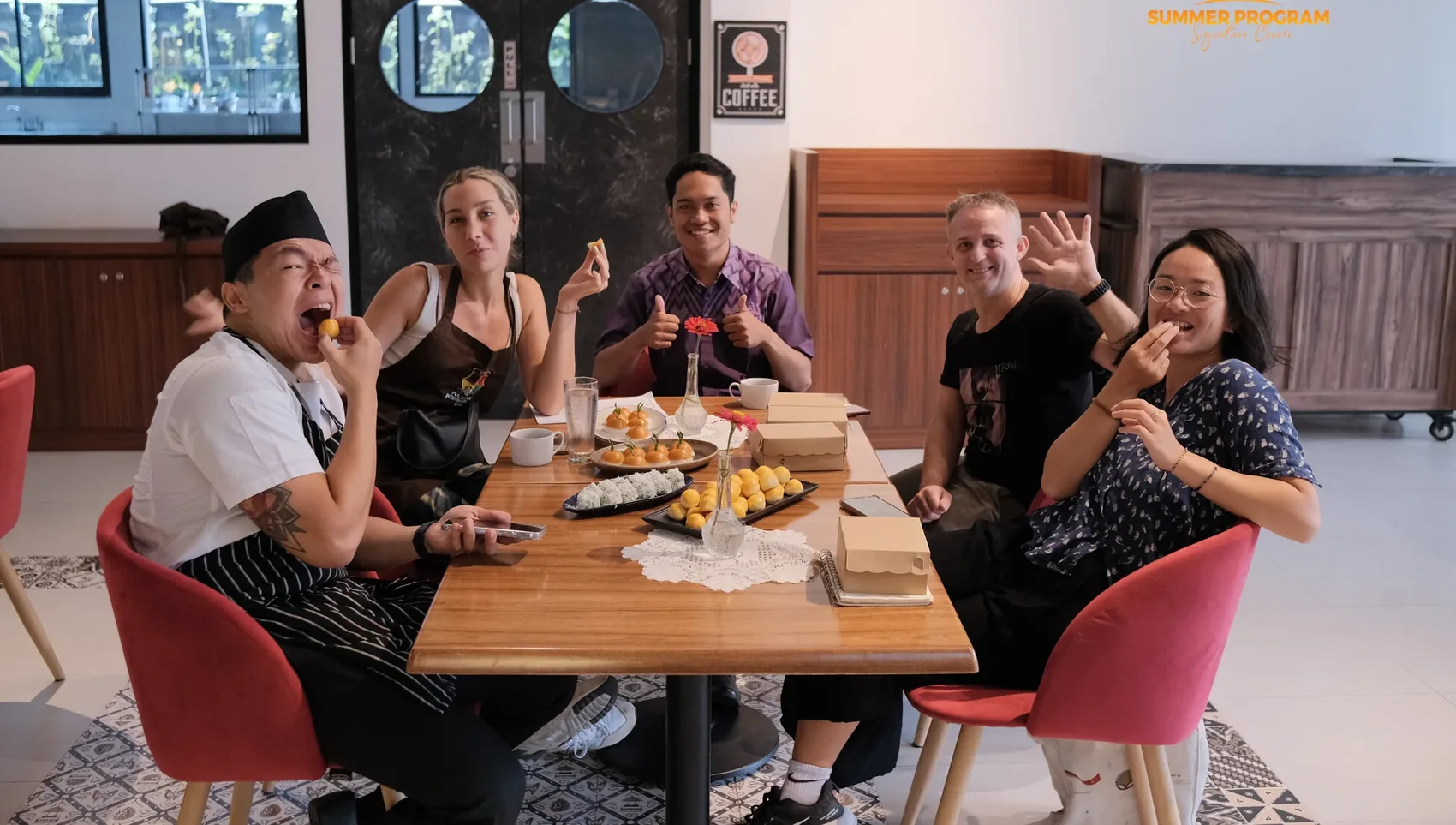 FridayYours
No timetable. Past cohorts have used the long weekend for rafting on the Ayung, glamping at Kintamani or a sunrise walk up Batur.
Thirty-plus dishes
and up to 10 ECTS.
Cooked with your own hands, from Rendang and Ayam Betutu to sushi, Pho and a case of Indonesian pastry. Recipes you keep and can cook at home.
Certificate and academic transcript with a grade for every module, from PIB College, documenting up to 10 ECTS. Your home institution alone decides recognition, so agree it with your advisor first.
Food-cost control, menu engineering and a culinary business plan you build across the four weeks. The craft and the numbers, together.
Cooks, hospitality students and food-obsessed travelers from around the world, few enough that you learn everyone's name and their signature dish, and that a chef can watch your hands.
Fees and
intake dates.
Each intake moves through Early Bird and Regular, and your fee is set by the phase on the day you register. The Late Year Session runs 2 to 27 November 2026, and registration is open now.
All figures are total fees and include the €350 registration, refundable when you cancel more than 8 weeks before intake, minus a €100 processing fee. Excludes accommodation, flights and food. Late Year Session 2026 does not include the student visa; from Mid Year Session 2027 the fee is higher and the visa is included. Seats are capped at thirty per session.
Shorter than four weeks?
From the 2027 sessions you can join for one, two or three weeks instead, student visa included. The fee is not a simple multiple of the one-week price: the registration and the visa are each paid once, not per week.
Registration
is open.
Late Year Session 2026 runs 2 to 27 November 2026 at PIB College. Regular is the second of three fee phases for this intake.
Get the
Info Pack.
One PDF, straight to your inbox: modules and credits, the weekly rhythm, kitchens and excursions, living in Bali, how to join.
A working kitchen.
trained chefs, ECTS credits.
PIB College, Politeknik Internasional Bali, runs one of Bali's leading culinary and pastry schools on a 15-hectare campus in Tabanan, with kitchen, MICE and pastry labs built to international standard. Your modules are taught by internationally trained chefs, examined here, and credited with a certificate and academic transcript. Guest chefs come in through the four weeks, and much of what you cook was picked up that morning, because the island grows most of it within an hour of the campus.
Good
to know.
Campus rooms, student visa and funding routes.
 on this program
On-campus options at PIB, from the Graha Wiyata Hotel to the dormitory, are bookable separately, so accommodation sits outside the program fee. You get the list and support after confirmation.
VisaWhat about the visa?→A proper student visa, the C-9, is standard at PIB, with the multi-entry E-30 on request. It is applied for through the college, never a visa on arrival. From Mid Year Session 2027 the visa is included in the fee; the 2026 sessions charged it separately.
FundingCan I afford this?→Early Bird saves €150 against the Late fee, the whole session sits under €1,500, and the €350 registration is refundable when you cancel more than 8 weeks before intake, minus a €100 processing fee.
Questions about
this program.
Kitchen experience, dishes, shorter bookings, credits, fees and visa.
Do I need to be a trained cook?
How many dishes do I actually cook?
Can I book fewer than four weeks?
Will my home university accept the credits?
What is included in the fee, and what is not?
Which visa do I need?
Apply for this
program.
The Late Year Session runs 2 to 27 November 2026 and registration is open in the Regular phase at €1,350. Five minutes to apply, an answer within one to three working days.
Not there yet? Ask us a question · Book a 1:1 call · WhatsApp us